ugrep
A faster, more capable grep replacement with interactive TUI, Boolean search, fuzzy matching, and archive support.
ugrep is a high-performance file pattern searcher that serves as a modern replacement for GNU/BSD grep. It includes an interactive text user interface for refining searches in real-time, Boolean search queries, fuzzy matching, and the ability to search within compressed files and nested archives.
ugrep supports searching PDFs, documents, and e-books through filters, can display file contents in hexdump format for binary analysis, and offers multiple output formats including JSON, XML, and CSV. The tool can sort results by name, size, modification time, or match quality, and supports configuration files for personalized settings. It also provides full Unicode extended regex pattern syntax with multi-line pattern matching without special command-line options.
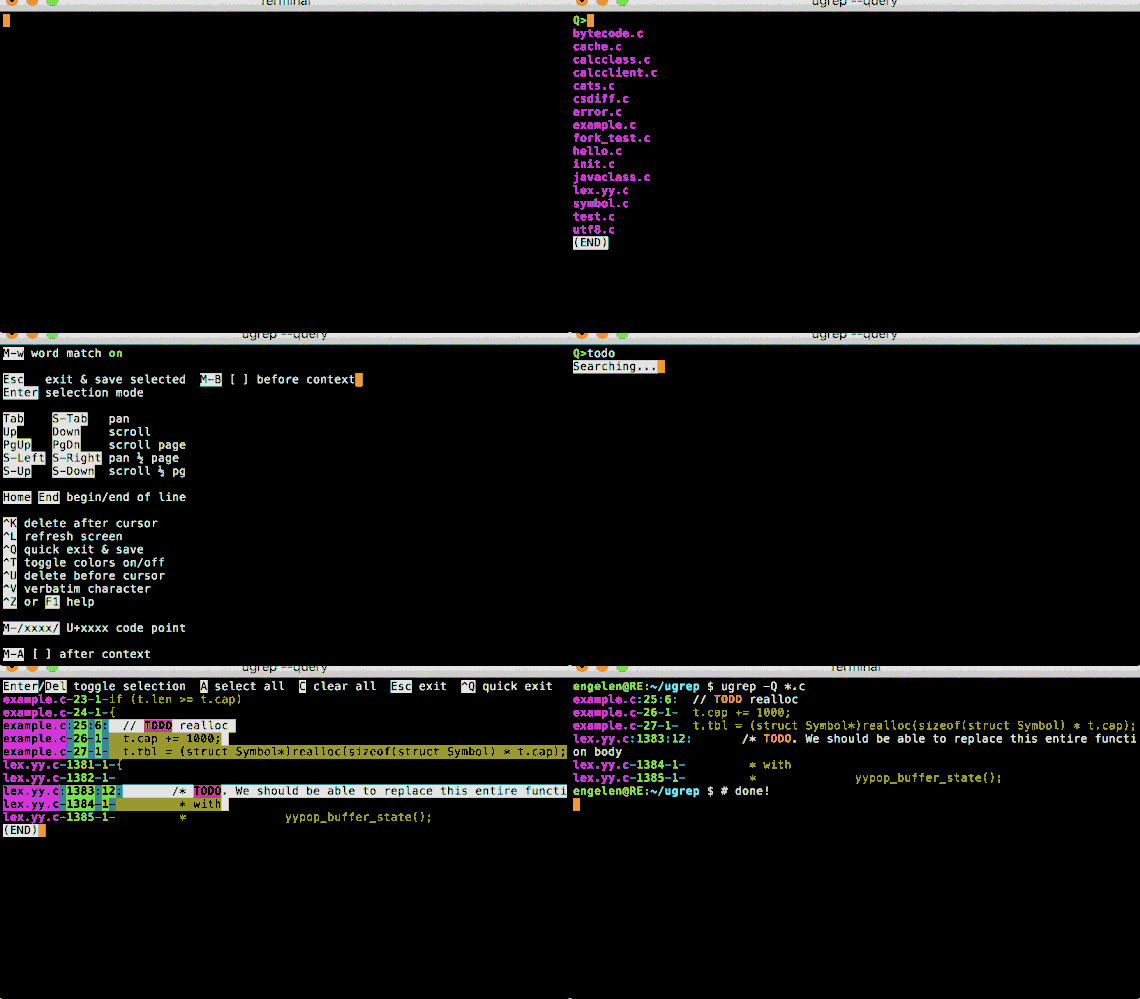
The interactive TUI mode allows you to refine your search queries in real-time, making it easy to explore large codebases or find the exact pattern you need. The fuzzy search capability helps find approximate matches when you're not sure of the exact pattern.
Basic usage
# Search for a pattern in files.
ugrep "pattern" file.txt

# Recursively search directories, case-insensitive.
ugrep -r -i "pattern" /path/to/directory

# Interactive query mode for real-time search refinement.
ugrep -Q

# Fuzzy search for approximate matches.
ugrep -Z "pattern" file.txt

# Boolean search with AND, OR, NOT operators.
ugrep -% "pattern1 | pattern2" file.txt

# Search within compressed files.
ugrep "pattern" archive.tar.gz