zstd
Fast real-time compression algorithm with better ratios and speeds than gzip.
Website: http://www.zstd.net
Project: https://github.com/facebook/zstd
Author: Yann Collet
Alternative to: gzip (See 2 others)
Language: C
This page last updated:
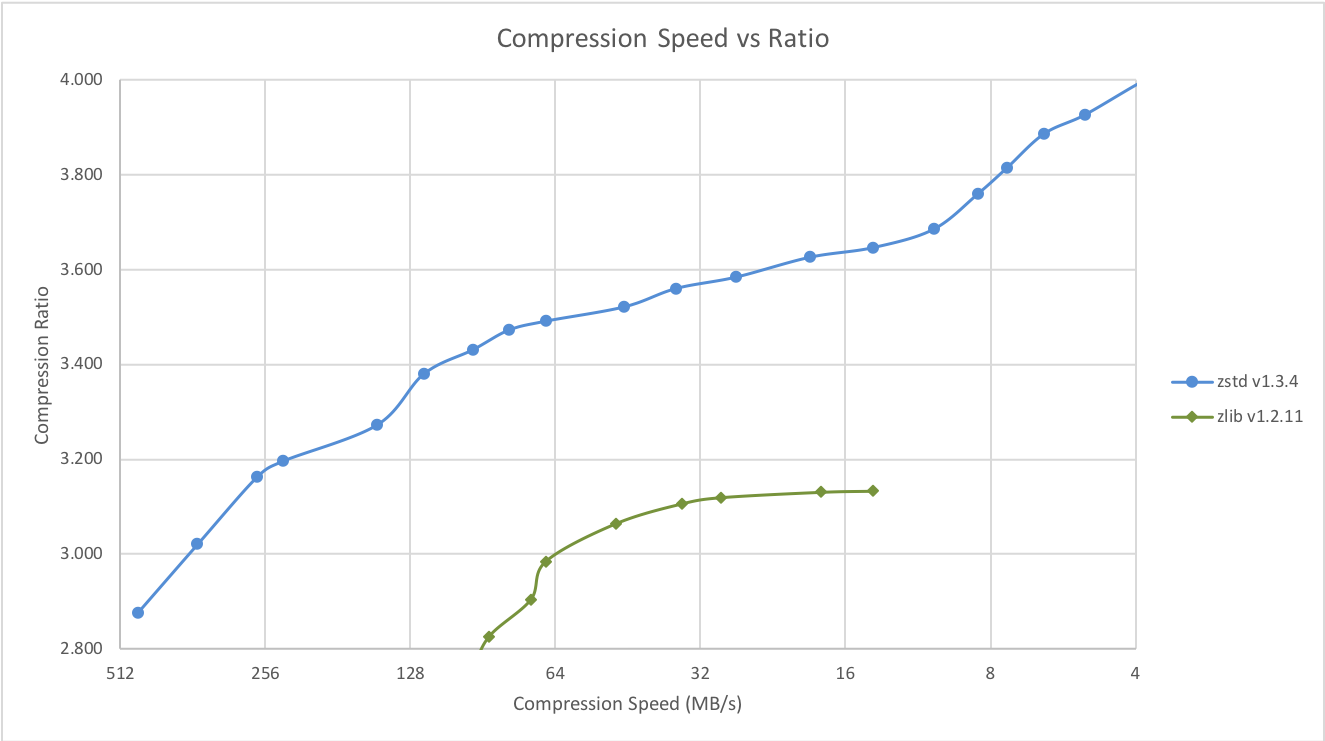
zstd (Zstandard) is a fast lossless compression algorithm developed at Meta, targeting real-time compression with better compression ratios than gzip. It provides a wide range of compression levels to trade speed for ratio, while keeping decompression fast at all levels.
Features
- Compression speed of ~500 MB/s and decompression of ~1500 MB/s at default settings
- Compression levels from -5 (fastest) to 19 (best ratio), plus ultra modes up to 22
- Multi-threaded compression support
- Dictionary training mode for dramatically better ratios on small files
- Can read and write
.gz,.xz, and.lz4files in addition to.zst - Standardized format documented in RFC 8878
- Drop-in replacement for gzip in most shell workflows (
zstd,unzstd,zstdcat)
Dictionary training
Compression algorithms learn from past data to compress future data, but struggle with small inputs that have no prior context. zstd's training mode solves this by analyzing a set of sample files and producing a dictionary that encodes patterns common to that data type.
- Train on a directory of representative samples to build a reusable dictionary
- Dictionaries are most effective on files under a few KB; gains diminish on larger files
- The same dictionary must be present for both compression and decompression
- Deploy one dictionary per data type for maximum benefit (e.g. one for JSON, one for logs)
# Build a dictionary from sample files.
zstd --train samples/* -o mydata.dict

# Compress using the dictionary.
zstd -D mydata.dict file.json

# Decompress using the dictionary.
zstd -D mydata.dict --decompress file.json.zst
Availability
Available on Linux, macOS, and Windows.